The People Behind the Science: Connecting Expertise to Patient Needs
Behind every biopharmaceutical development program is a network of scientists, engineers, and project managers working across disciplines to address complex challenges. While their responsibilities differ, their work contributes to a shared objective: to bring innovative treatments closer to patients.
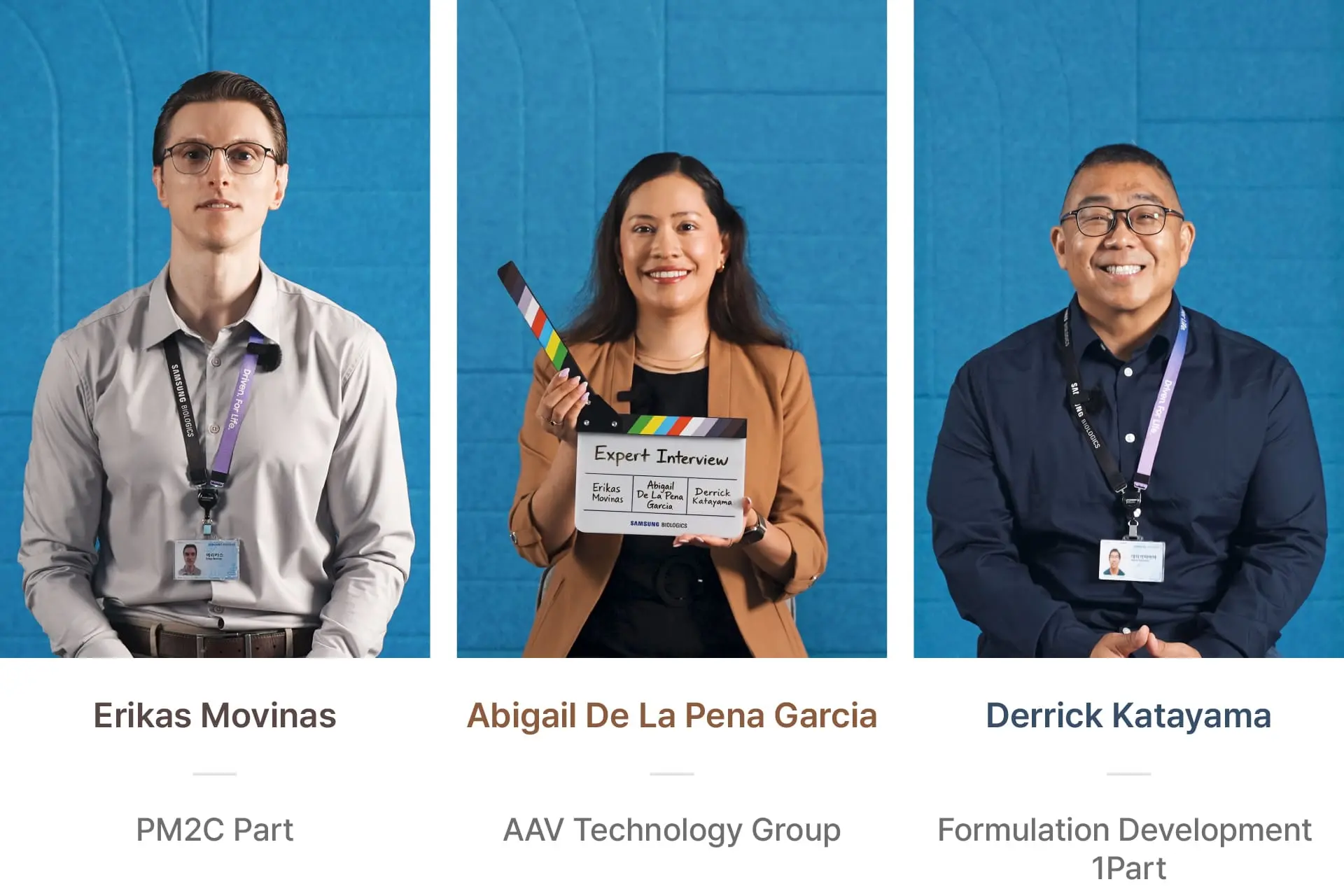
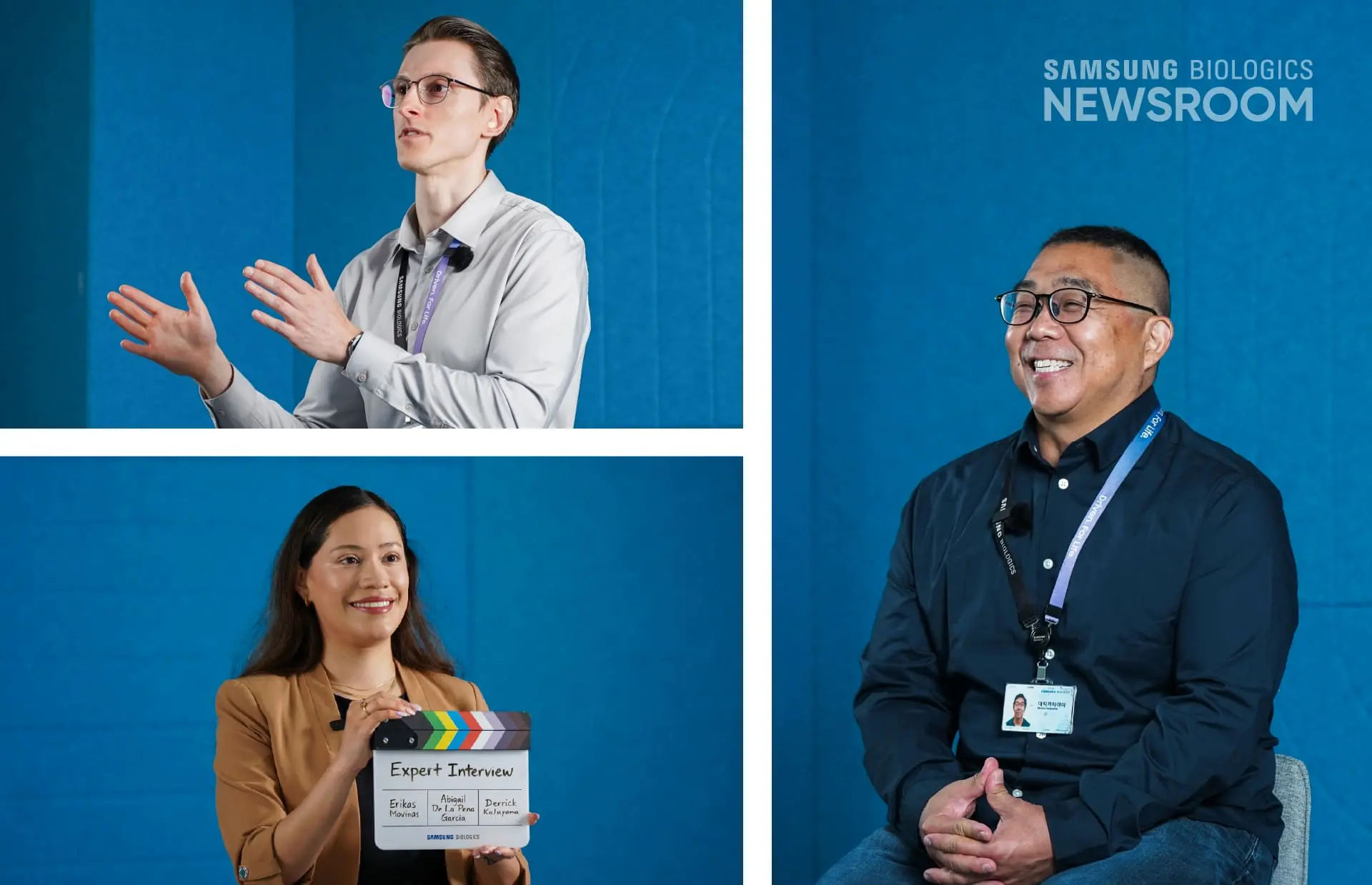
At Samsung Biologics, this collective expertise spans the development and manufacturing lifecycle, from optimizing drug candidates and coordinating client programs to advancing technologies for emerging therapeutic modalities. Experts across three departments share what makes their work meaningful and how their roles support the broader journey of biopharmaceutical development.
Applying science to advance drug development
“One of the most rewarding aspects of my work is having the opportunity
to be a part of successful biopharmaceutical development.”
– Derrick Katayama, Associate Director of CDO Formulation
Formulation development focuses on identifying the conditions that stabilize biopharmaceutical molecules. Depending on the development stage, formulation can involve assessing a molecule's properties to inform candidate selection or determining specific concentrations and routes of administration. A detailed molecular understanding is needed, especially when drug candidates exhibit chemical or physical instabilities.
"Some drug candidates present stability challenges that can limit their development potential," Katayama explained. "Applying scientific principles and our development experience to evaluate possible solutions is one of the most rewarding aspects of our work."
By identifying formulation strategies suited to each molecule, the team helps clients address development challenges and make informed decisions as their programs progress.
For Katayama, the significance of this work extends beyond the laboratory. Each scientific challenge addressed represents a step toward developing a treatment that could ultimately benefit patients.
Supporting every step toward patients
“The proudest moment for me is the day a project we've managed from the very beginning finally ships to a client and reaches patients.”
– Erikas Movinas, Senior Project Manager
While formulation scientists focus on the properties of individual molecules, project managers help connect many activities involved in moving a development and manufacturing program forward.
For Samsung Biologics' Project Management team, the most meaningful part of their work is seeing a project progress from its earliest stages to the delivery of a product that may ultimately reach patients in need.
"We may not manufacture the medicine ourselves, but our role is to help ensure that every part of the project comes together," Movinas said. "Seeing a project reach its delivery milestone is especially rewarding, knowing what that medicine could mean to the patients who need it."
As biopharmaceutical modalities become increasingly diverse, project management involves navigating more complex development timelines, technologies, and supply chains. Clients are seeking greater flexibility and predictability while managing evolving technical and regulatory requirements.
To address these challenges, the team focuses on identifying potential risks early, minimizing unexpected disruptions, and coordinating closely across technical, manufacturing, quality, and supply chain functions. This proactive approach helps clients navigate complex programs with greater confidence while keeping critical milestones on track.
Advancing technologies for emerging therapies
“Being part of a field that pushes the boundaries of science and innovation,
while bringing hope to patients and families with limited treatment options,
is both inspiring and deeply rewarding.”
– Abigail De La Pena Garcia, Director of AAV Technology
Adeno-associated virus (AAV) vectors represent a key technology in gene therapy development, offering the potential to deliver therapeutic genetic material to treat the underlying causes of certain genetic diseases. Samsung Biologics’ AAV Technology team has built robust capabilities in viral vector manufacturing, while advancing research and development activities across intensified manufacturing, vector engineering, cell line development, and analytical technologies.
For Garcia, the potential of gene therapy to address the underlying causes of genetic diseases, rather than simply managing symptoms, is what makes her work particularly meaningful.
Through its continued R&D activities, Samsung Biologics aims to address the technical complexities of gene therapy development and support clients in bringing innovative treatments closer to patients.
Different roles, shared purpose
From formulation development and project management to advanced therapeutic technologies, each function brings specialized expertise to different stages of biopharmaceutical development and manufacturing.
Samsung Biologics harnesses these capabilities to address evolving client needs, support increasingly complex therapeutic programs, and advance medicines for patients worldwide.
Behind every biopharmaceutical development program is a network of scientists, engineers, and project managers working across disciplines to address complex challenges. While their responsibilities differ, their work contributes to a shared objective: to bring innovative treatments closer to patients.
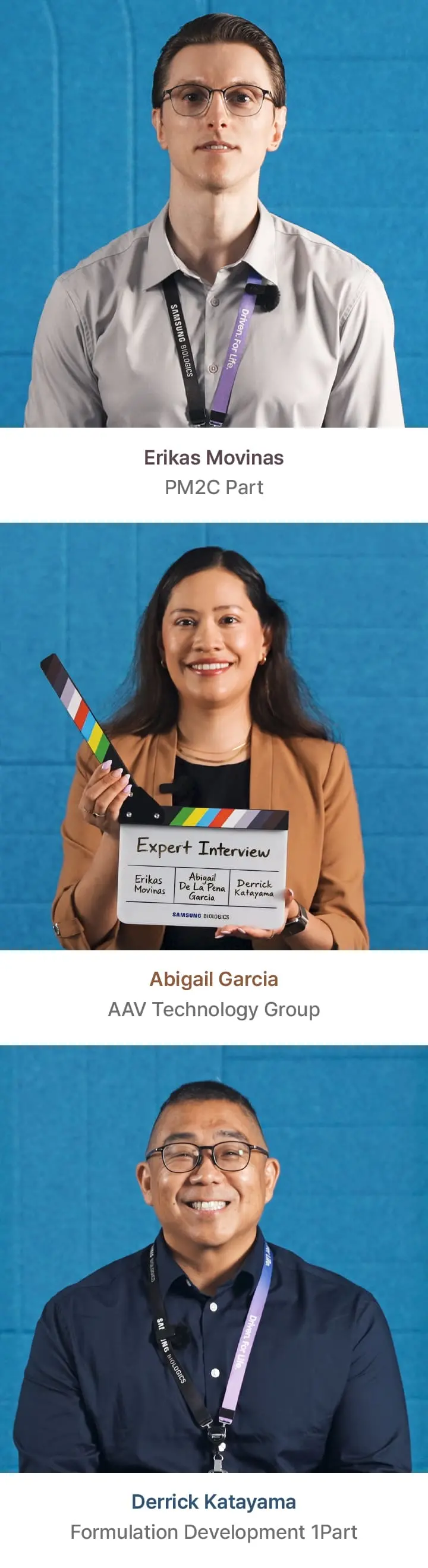
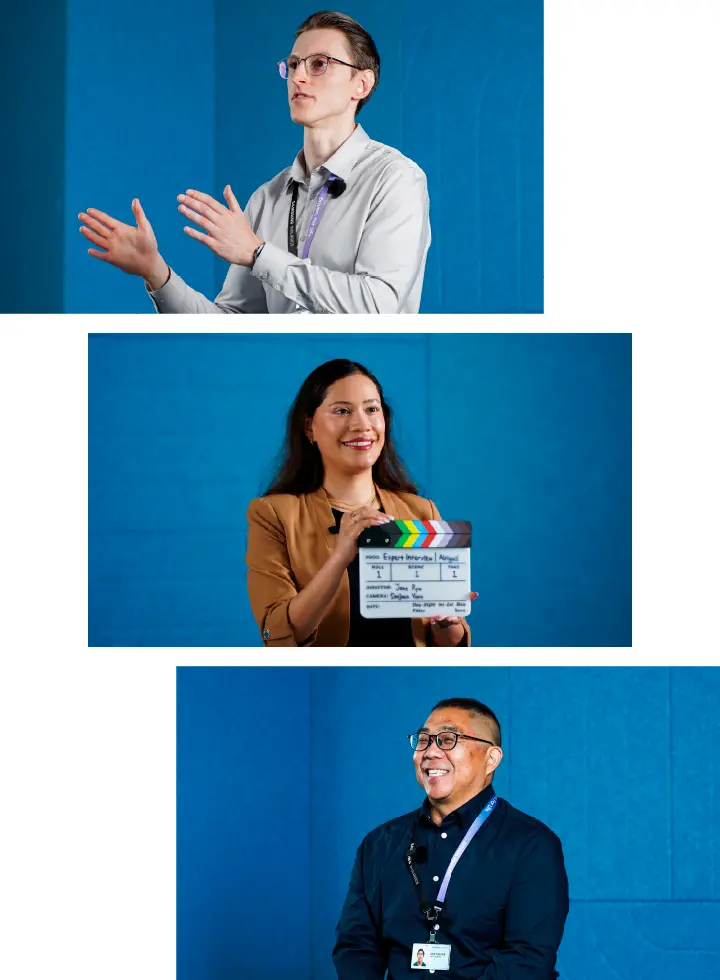
At Samsung Biologics, this collective expertise spans the development and manufacturing lifecycle, from optimizing drug candidates and coordinating client programs to advancing technologies for emerging therapeutic modalities. Experts across three departments share what makes their work meaningful and how their roles support the broader journey of biopharmaceutical development.
Applying science to advance drug development
“One of the most rewarding aspects of my work is having the opportunity to be a part of successful biopharmaceutical development.”
– Derrick Katayama, Associate Director of CDO Formulation
Formulation development focuses on identifying the conditions that stabilize biopharmaceutical molecules. Depending on the development stage, formulation can involve assessing a molecule's properties to inform candidate selection or determining specific concentrations and routes of administration. A detailed molecular understanding is needed, especially when drug candidates exhibit chemical or physical instabilities.
"Some drug candidates present stability challenges that can limit their development potential," Katayama explained. "Applying scientific principles and our development experience to evaluate possible solutions is one of the most rewarding aspects of our work."
By identifying formulation strategies suited to each molecule, the team helps clients address development challenges and make informed decisions as their programs progress.
For Katayama, the significance of this work extends beyond the laboratory. Each scientific challenge addressed represents a step toward developing a treatment that could ultimately benefit patients.
Supporting every step toward patients
“The proudest moment for me is the day a project we've managed from the very beginning finally ships to a client and reaches patients.”
– Erikas Movinas, Senior Project Manager
While formulation scientists focus on the properties of individual molecules, project managers help connect many activities involved in moving a development and manufacturing program forward.
For Samsung Biologics' Project Management team, the most meaningful part of their work is seeing a project progress from its earliest stages to the delivery of a product that may ultimately reach patients in need.
"We may not manufacture the medicine ourselves, but our role is to help ensure that every part of the project comes together," Movinas said. "Seeing a project reach its delivery milestone is especially rewarding, knowing what that medicine could mean to the patients who need it."
As biopharmaceutical modalities become increasingly diverse, project management involves navigating more complex development timelines, technologies, and supply chains. Clients are seeking greater flexibility and predictability while managing evolving technical and regulatory requirements.
To address these challenges, the team focuses on identifying potential risks early, minimizing unexpected disruptions, and coordinating closely across technical, manufacturing, quality, and supply chain functions. This proactive approach helps clients navigate complex programs with greater confidence while keeping critical milestones on track.
Advancing technologies for emerging therapies
“Being part of a field that pushes the boundaries of science and innovation, while bringing hope to patients and families with limited treatment options, is both inspiring and deeply rewarding.”
– Abigail De La Pena Garcia, Director of AAV Technology
Adeno-associated virus (AAV) vectors represent a key technology in gene therapy development, offering the potential to deliver therapeutic genetic material to treat the underlying causes of certain genetic diseases. Samsung Biologics’ AAV Technology team has built robust capabilities in viral vector manufacturing, while advancing research and development activities across intensified manufacturing, vector engineering, cell line development, and analytical technologies.
For Garcia, the potential of gene therapy to address the underlying causes of genetic diseases, rather than simply managing symptoms, is what makes her work particularly meaningful.
Through its continued R&D activities, Samsung Biologics aims to address the technical complexities of gene therapy development and support clients in bringing innovative treatments closer to patients.
Different roles, shared purpose
From formulation development and project management to advanced therapeutic technologies, each function brings specialized expertise to different stages of biopharmaceutical development and manufacturing.
Samsung Biologics harnesses these capabilities to address evolving client needs, support increasingly complex therapeutic programs, and advance medicines for patients worldwide.
Share article
Related Content