Regulatory success through open collaboration: Aligning teams, clients, and health authorities to achieve on-time delivery
Open collaboration is a working model built on a shared commitment to breaking down silos. This model brings together biopharmaceutical companies and their outsourcing partners to ensure compliance, minimize risks, and submit time-sensitive regulatory documents, ultimately securing approvals on schedule.
A global pharmaceutical company faced an urgent regulatory challenge when it needed to supply respiratory medicines for children quickly. Approvals had to be secured faster than usual to meet a fixed launch window. Multiple teams worked in close coordination, continuously sharing information with one another to eliminate gaps in the process. By leveraging its regulatory and operational excellence, along with flexibility, empathy, and transparent communication, Samsung Biologics was able to meet the client’s urgent needs and ensure that patients received treatment on time.

“This project required teams to move together toward a shared outcome. By keeping communication open and embracing a patient-centered mindset, we helped the client achieve approval within a very narrow window.”
Bomi Kim | Senior Regulatory Affairs Specialist
A timeline with no margin for delay
The goal was to secure approvals in the United States and European Union, the primary reference regions for the global regulatory market, to create a pathway for subsequent approvals in smaller regions and to support global patient access.
Understanding the urgency, the Samsung Biologics Regulatory Affairs (RA) team worked closely with cross-functional teams and maintained continuous engagement with the client throughout every stage of the process, from data collection to the development of robust rationales for each filing document. Following the completion of process performance qualification (PPQ) batches, the RA team had only months to prepare the documents and submit the regulatory dossiers.
“From the final PPQ batch, we had only about six months to submit,” Kim says. “Outside the COVID-19 period, this was one of the fastest timelines we’ve ever managed.”
The final submission package alone spanned several hundred pages, representing only a fraction of the total effort involved. Behind it sat tens of thousands of pages of source documentation, including technical reports, validation records, and supporting analyses. Every section of the Common Technical Document (CTD) reflected cross-functional collaboration orchestrated by the RA team. Input from operations, process controls, material qualification, validation, and stability studies were carefully synthesized to ensure that every data point aligned with the defined specifications and regulatory expectations.
Turning complexity into coordinated action
Delivering this level of detail—while maintaining speed and alignment across teams as well as with the client under a compressed timeline—required both the experience and operational maturity that Samsung Biologics had built as a global contract development and manufacturing organization (CDMO).
The RA team adopted a review strategy in parallel. Rather than relying on a single, sequential review at the end, the teams exchanged feedback as individual CTD sections were completed, while simultaneously cross-checking for accuracy, consistency, and data integrity.
“The related CTD has more than 20 sections,” Kim notes. “Once you understand which reports feed into which sections, you can prioritize the work without slowing down the overall timeline.”
Transparent communication helped mitigate any potential overlap and eliminate silos between teams. Process data and testing results were cross-checked for accuracy; real-time feedback from the manufacturing floor was shared with scientists and operators; and as a result, every table, figure, and statement in the CTD met the regulatory requirements.

Hoyoung Shin, Director of Regulatory Affairs at Samsung Biologics, emphasizes that transparency forms the foundation of regulatory success—particularly when speed is critical.
“From a Health Authority’s perspective, trust and transparency must be the default in regulatory work,” Shin says. “If that trust is compromised, everything becomes more complicated. Even strong data may be scrutinized, causing unnecessary delays.”
Building alignment under pressure
Ensuring that teams understand not only what needs to be done, but also why, prevents friction within an organization that operates under accelerated timelines.
“When issues arise, the first step is always alignment,” Shin says. “Why does this date matter? How can we solve the problem together? How does each team’s contribution connect to the bigger picture? These questions foster internal clarity and invite clients to more constructive discussions that help us file accurately and quickly.”
In preparing the CTD dossier, more than 100 individuals across multiple functions participated in drafting and reviewing. While each played a distinct role, all remained aligned around a shared goal and a patient-centered perspective.
From preparing and submitting the documents to addressing the Health Authorities’ questions and supporting the approvals, Samsung Biologics completed the entire process in under a year. Along the way, the RA team addressed complex regulatory queries, often within one to two days. A culture of open collaboration enabled the rapid identification of subject matter experts, efficient data retrieval, and translation of technical information into clear, regulatory-ready language without delay.
Sustaining a culture of open collaboration
Maintaining open collaboration under pressure can be challenging. Shin points to two foundations that sustain it: a proven track record and transparent communication.
When positive feedback arrives from clients, Shin’s team shares it with all contributors, sometimes more than 100 people, and consistently ties that recognition back to patient impact. This growing sense of patient-centered workmanship drives the scientists, operators, quality experts, and engineers to engage the RA team earlier, proactively discussing questions and potential implications before any operational changes are made. This feedback loop reinforces shared ownership and encourages open collaboration across the organization.
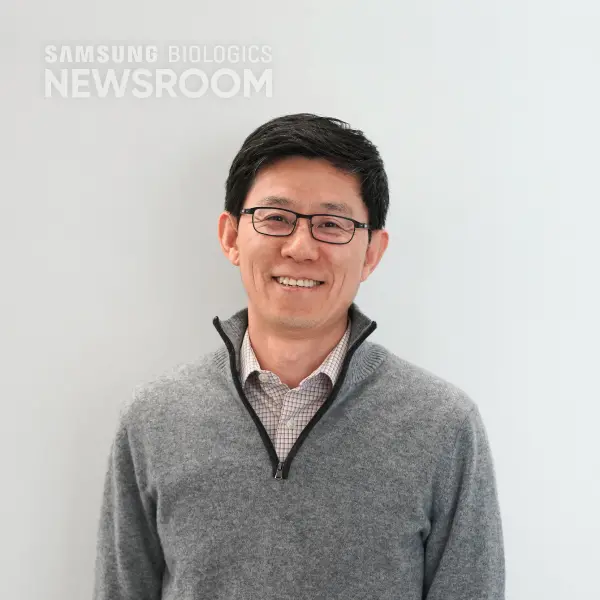
“The true value of open collaboration isn’t simply
responding to regulatory complexity. It’s anticipating challenges together, protecting timelines, strengthening trust, and ensuring that clients can deliver on the promises they make to patients.”
Hoyoung Shin | Director of Regulatory Affairs
Ultimately, this is the promise of open collaboration: a CDMO that fully embraces its clients’ commitment to patients and navigates regulatory complexity as one team—keeping timelines on track and patients at the center.
Open collaboration is a working model built on a shared commitment to breaking down silos. This model brings together biopharmaceutical companies and their outsourcing partners to ensure compliance, minimize risks, and submit time-sensitive regulatory documents, ultimately securing approvals on schedule.
A global pharmaceutical company faced an urgent regulatory challenge when it needed to supply respiratory medicines for children quickly. Approvals had to be secured faster than usual to meet a fixed launch window. Multiple teams worked in close coordination, continuously sharing information with one another to eliminate gaps in the process. By leveraging its regulatory and operational excellence, along with flexibility, empathy, and transparent communication, Samsung Biologics was able to meet the client’s urgent needs and ensure that patients received treatment on time.
“This project required teams to move together toward a shared outcome. By keeping communication open and embracing a patient-centered mindset, we helped the client achieve approval within a very narrow window.”
Bomi Kim | Senior Regulatory Affairs Specialist
A timeline with no margin for delay
The goal was to secure approvals in the United States and European Union, the primary reference regions for the global regulatory market, to create a pathway for subsequent approvals in smaller regions and to support global patient access.
Understanding the urgency, the Samsung Biologics Regulatory Affairs (RA) team worked closely with cross-functional teams and maintained continuous engagement with the client throughout every stage of the process, from data collection to the development of robust rationales for each filing document. Following the completion of process performance qualification (PPQ) batches, the RA team had only months to prepare the documents and submit the regulatory dossiers.
“From the final PPQ batch, we had only about six months to submit,” Kim says. “Outside the COVID-19 period, this was one of the fastest timelines we’ve ever managed.”
The final submission package alone spanned several hundred pages, representing only a fraction of the total effort involved. Behind it sat tens of thousands of pages of source documentation, including technical reports, validation records, and supporting analyses. Every section of the Common Technical Document (CTD) reflected cross-functional collaboration orchestrated by the RA team. Input from operations, process controls, material qualification, validation, and stability studies were carefully synthesized to ensure that every data point aligned with the defined specifications and regulatory expectations.
Turning complexity into coordinated action
Delivering this level of detail—while maintaining speed and alignment across teams as well as with the client under a compressed timeline—required both the experience and operational maturity that Samsung Biologics had built as a global contract development and manufacturing organization (CDMO).
The RA team adopted a review strategy in parallel. Rather than relying on a single, sequential review at the end, the teams exchanged feedback as individual CTD sections were completed, while simultaneously cross-checking for accuracy, consistency, and data integrity.
“The related CTD has more than 20 sections,” Kim notes. “Once you understand which reports feed into which sections, you can prioritize the work without slowing down the overall timeline.”
Transparent communication helped mitigate any potential overlap and eliminate silos between teams. Process data and testing results were cross-checked for accuracy; real-time feedback from the manufacturing floor was shared with scientists and operators; and as a result, every table, figure, and statement in the CTD met the regulatory requirements.

Hoyoung Shin, Director of Regulatory Affairs at Samsung Biologics, emphasizes that transparency forms the foundation of regulatory success—particularly when speed is critical.
“From a Health Authority’s perspective, trust and transparency must be the default in regulatory work,” Shin says. “If that trust is compromised, everything becomes more complicated. Even strong data may be scrutinized, causing unnecessary delays.”
Building alignment under pressure
Ensuring that teams understand not only what needs to be done, but also why, prevents friction within an organization that operates under accelerated timelines.
“When issues arise, the first step is always alignment,” Shin says. “Why does this date matter? How can we solve the problem together? How does each team’s contribution connect to the bigger picture? These questions foster internal clarity and invite clients to more constructive discussions that help us file accurately and quickly.”
In preparing the CTD dossier, more than 100 individuals across multiple functions participated in drafting and reviewing. While each played a distinct role, all remained aligned around a shared goal and a patient-centered perspective.
From preparing and submitting the documents to addressing the Health Authorities’ questions and supporting the approvals, Samsung Biologics completed the entire process in under a year. Along the way, the RA team addressed complex regulatory queries, often within one to two days. A culture of open collaboration enabled the rapid identification of subject matter experts, efficient data retrieval, and translation of technical information into clear, regulatory-ready language without delay.
Sustaining a culture of open collaboration
Maintaining open collaboration under pressure can be challenging. Shin points to two foundations that sustain it: a proven track record and transparent communication.
When positive feedback arrives from clients, Shin’s team shares it with all contributors, sometimes more than 100 people, and consistently ties that recognition back to patient impact. This growing sense of patient-centered workmanship drives the scientists, operators, quality experts, and engineers to engage the RA team earlier, proactively discussing questions and potential implications before any operational changes are made. This feedback loop reinforces shared ownership and encourages open collaboration across the organization.
“The true value of open collaboration isn’t simply responding to regulatory complexity. It’s anticipating challenges together, protecting timelines, strengthening trust, and ensuring that clients can deliver on the promises they make to patients.”
Hoyoung Shin | Director of Regulatory Affairs
Ultimately, this is the promise of open collaboration: a CDMO that fully embraces its clients’ commitment to patients and navigates regulatory complexity as one team—keeping timelines on track and patients at the center.
Share article
Related Content