Biomedicines save hundreds of millions of lives. Ensuring their continued delivery requires not only scientific excellence but also environmental sustainability. Samsung Biologics, in line with our commitment to achieving net zero, has established robust systems and long-term strategies that are actively implemented across its operations and the supply chain.
Reducing Emissions Amid Growth
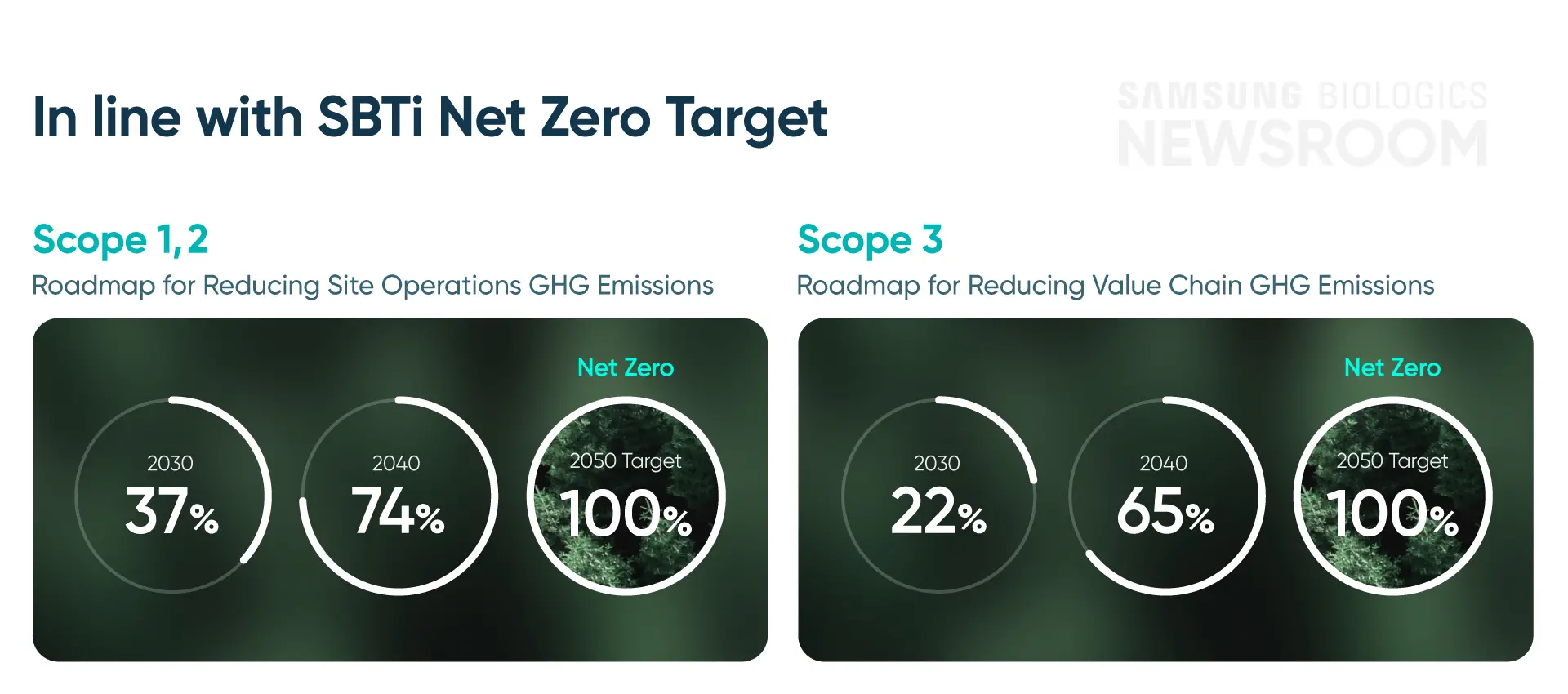
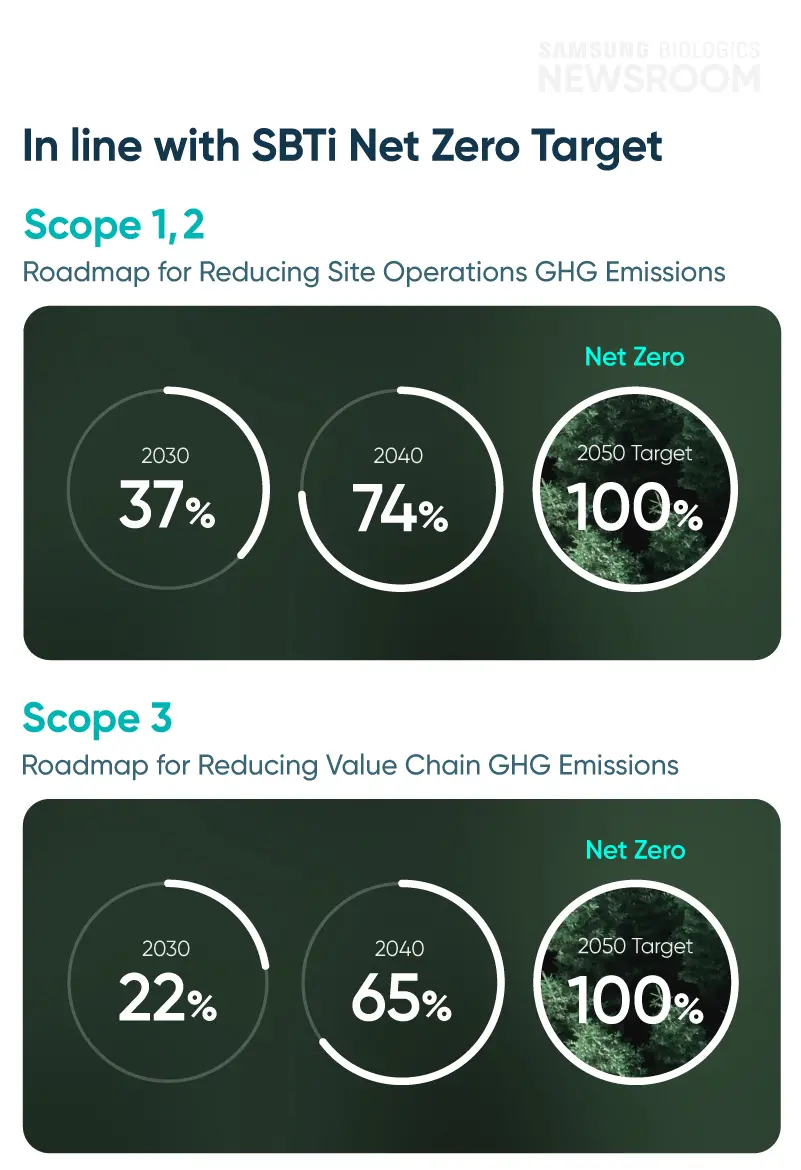
To support growing global demand for biologics, Samsung Biologics expanded its capacity with the launch of Plant 5 and the ADC facility, which inevitably increased manufacturing emissions. Despite this expansion, our greenhouse gas (GHG) emission reduction targets – aligned with the Science Based Targets initiative (SBTi) – remain on track. Compared to the baseline year, Scope 1 and 2 GHG emissions decreased by 9.0% in 2025. We offset the impact of expanded capacity through energy conservation initiatives, greater efficiency, infrastructure upgrades, and an accelerated transition to renewable energy. Across the value chain, Scope 3 GHG emissions decreased by 6.4% with the support of primary emissions data collection from suppliers representing approximately 60% of total procurement spending. By 2034, Samsung Biologics aims to reduce Scope 1 and 2 GHG emissions by 58.8% and Scope 3 GHG emissions by 35%.
Measuring Supply Chain Impact
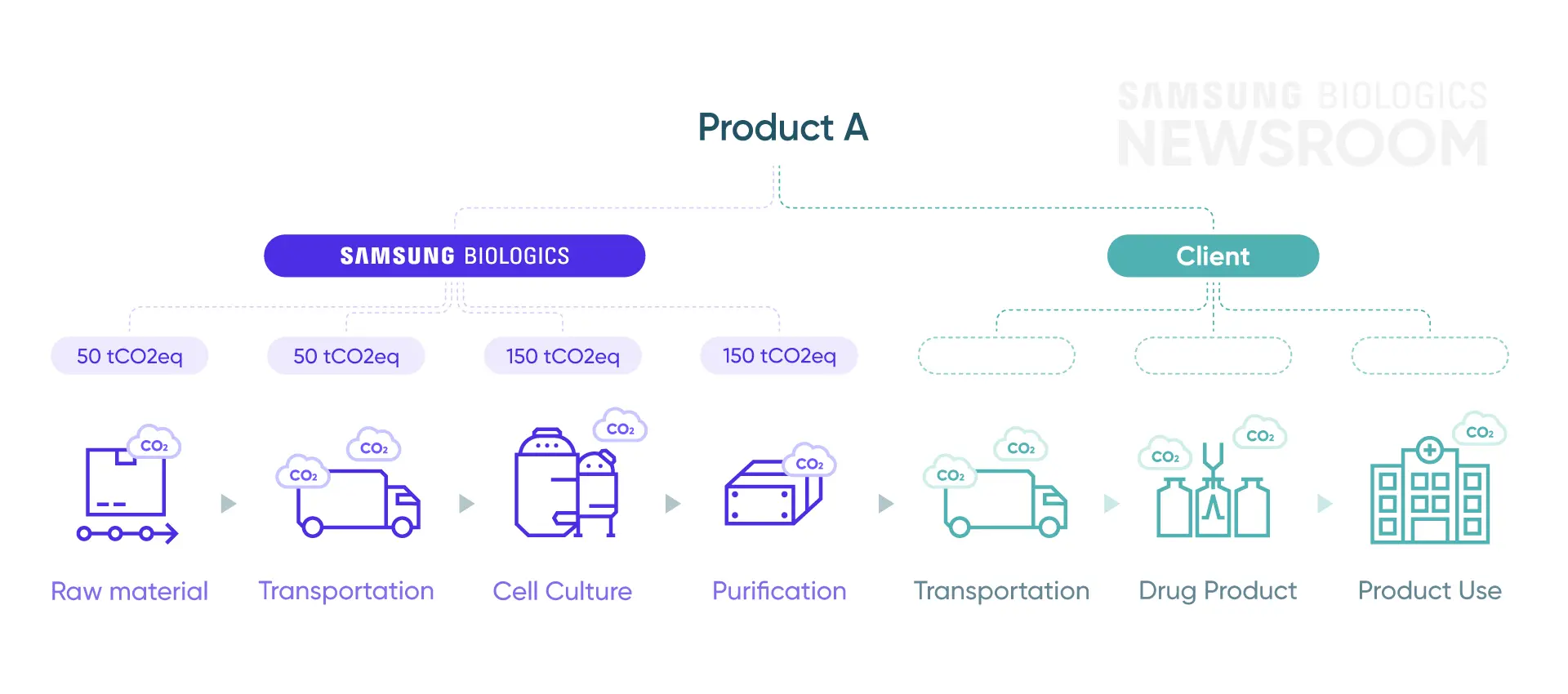
As Scope 3 GHG emissions are reduced, the product carbon footprint (PCF) plays a key role in measuring and managing emissions across the value chain. Effective decarbonization starts with reliable emissions data, which the PCF helps collect: Samsung Biologics requests data from suppliers and provides carbon footprint assessments to clients. In 2025, PCF was calculated for 25 products. We are well-equipped to perform calculations and provide consistent carbon footprint data at scale in response to future client requests.
Transitioning to Renewable Energy
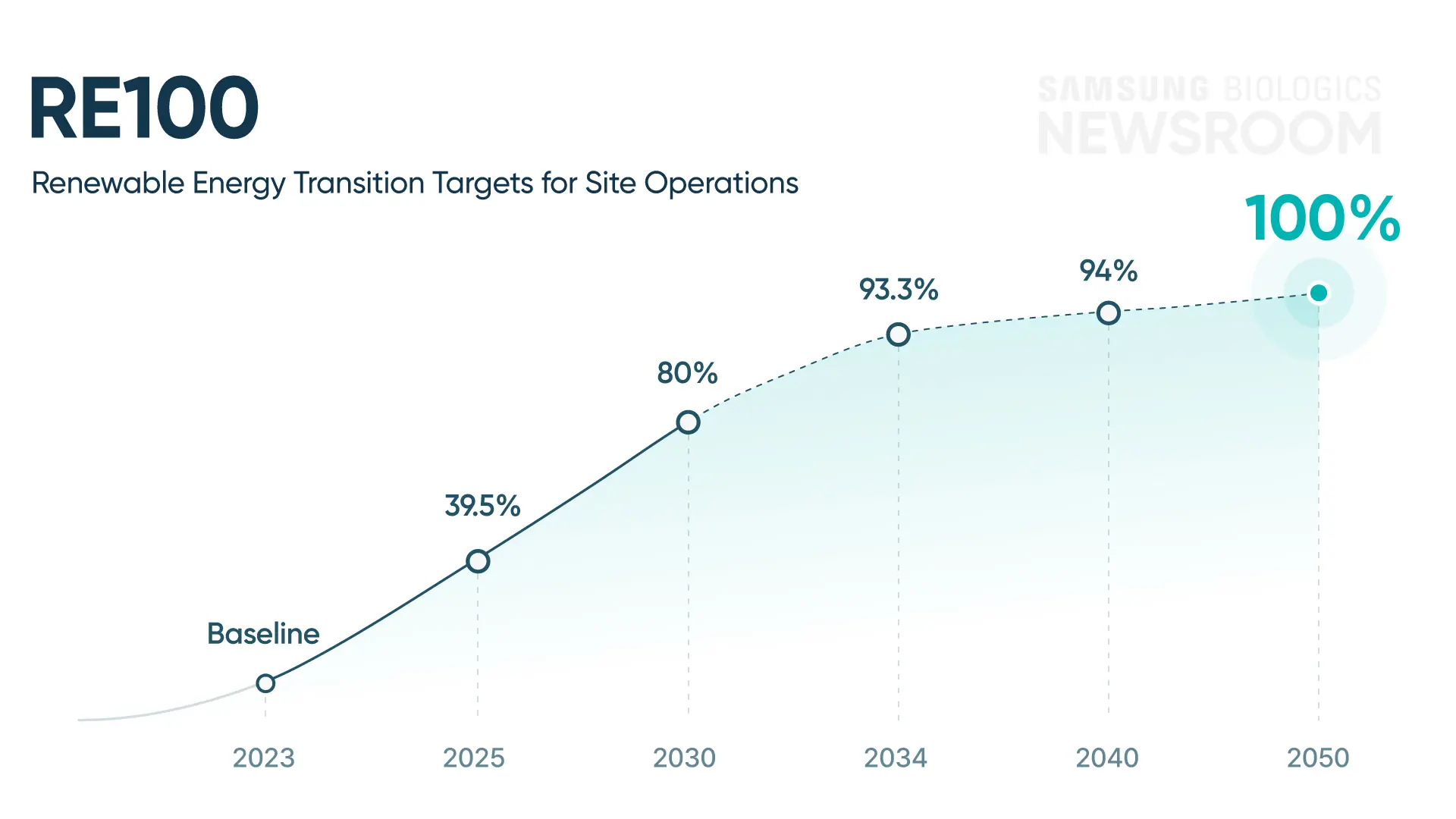
Beyond reducing emissions, Samsung Biologics is transforming how it powers its operations. Since joining Renewable Energy 100 (RE100) in 2022, we have steadily increased our renewable energy transition rate. In 2025, we achieved a transition rate of 39.5%, with 32.8% procured through the Green Premium program, 6.4% through Renewable Energy Certificates, and 0.4% through on-site power generation. To build a stable renewable energy portfolio, we have adjusted our targets to RE80 by 2030 and RE94 by 2040. We have set our strategies accordingly, with a gradual shift toward renewable Power Purchase Agreements to ensure long-term supply stability.
At the heart of every environmental initiative at Samsung Biologics is a single mission: to deliver life-saving medicines for generations to come. By embedding sustainability throughout our operations and supply chain, we recognize that the journey to net zero is not a destination but an ongoing commitment to a healthier, more sustainable future.
Biomedicines save hundreds of millions of lives. Ensuring their continued delivery requires not only scientific excellence but also environmental sustainability. Samsung Biologics, in line with our commitment to achieving net zero, has established robust systems and long-term strategies that are actively implemented across its operations and the supply chain.
Reducing Emissions Amid Growth
To support growing global demand for biologics, Samsung Biologics expanded its capacity with the launch of Plant 5 and the ADC facility, which inevitably increased manufacturing emissions. Despite this expansion, our greenhouse gas (GHG) emission reduction targets – aligned with the Science Based Targets initiative (SBTi) – remain on track. Compared to the baseline year, Scope 1 and 2 GHG emissions decreased by 9.0% in 2025. We offset the impact of expanded capacity through energy conservation initiatives, greater efficiency, infrastructure upgrades, and an accelerated transition to renewable energy. Across the value chain, Scope 3 GHG emissions decreased by 6.4% with the support of primary emissions data collection from suppliers representing approximately 60% of total procurement spending. By 2034, Samsung Biologics aims to reduce Scope 1 and 2 GHG emissions by 58.8% and Scope 3 GHG emissions by 35%.
Measuring Supply Chain Impact
As Scope 3 GHG emissions are reduced, the product carbon footprint (PCF) plays a key role in measuring and managing emissions across the value chain. Effective decarbonization starts with reliable emissions data, which the PCF helps collect: Samsung Biologics requests data from suppliers and provides carbon footprint assessments to clients. In 2025, PCF was calculated for 25 products. We are well-equipped to perform calculations and provide consistent carbon footprint data at scale in response to future client requests.
Transitioning to Renewable Energy
Beyond reducing emissions, Samsung Biologics is transforming how it powers its operations. Since joining Renewable Energy 100 (RE100) in 2022, we have steadily increased our renewable energy transition rate. In 2025, we achieved a transition rate of 39.5%, with 32.8% procured through the Green Premium program, 6.4% through Renewable Energy Certificates, and 0.4% through on-site power generation. To build a stable renewable energy portfolio, we have adjusted our targets to RE80 by 2030 and RE94 by 2040. We have set our strategies accordingly, with a gradual shift toward renewable Power Purchase Agreements to ensure long-term supply stability.
At the heart of every environmental initiative at Samsung Biologics is a single mission: to deliver life-saving medicines for generations to come. By embedding sustainability throughout our operations and supply chain, we recognize that the journey to net zero is not a destination but an ongoing commitment to a healthier, more sustainable future.
Share article
Related Content