Interview: What enables consistent execution throughout the manufacturing lifecycle?
As biopharmaceutical manufacturing evolves, manufacturers are placing greater emphasis on reducing variability and strengthening process understanding across the product lifecycle. From process development and technology transfer to quality oversight and product release, each stage presents opportunities to improve how manufacturing outcomes are anticipated, managed, and consistently executed.
To explore how these priorities are shaping the future of biomanufacturing, we turned to insights from three experts at Samsung Biologics - working across process development, quality, and drug product (DP) manufacturing - whose recent discussions on these topics offered valuable perspectives. While their roles differ, each contributes to a broader effort to support predictable manufacturing through deeper process understanding, regulatory alignment, and digital innovation.

“Predictability starts with process understanding”
- Kateryna Mykhailova, Process Development Upstream
Q. How can manufacturers strengthen process understanding before commercial manufacturing begins?
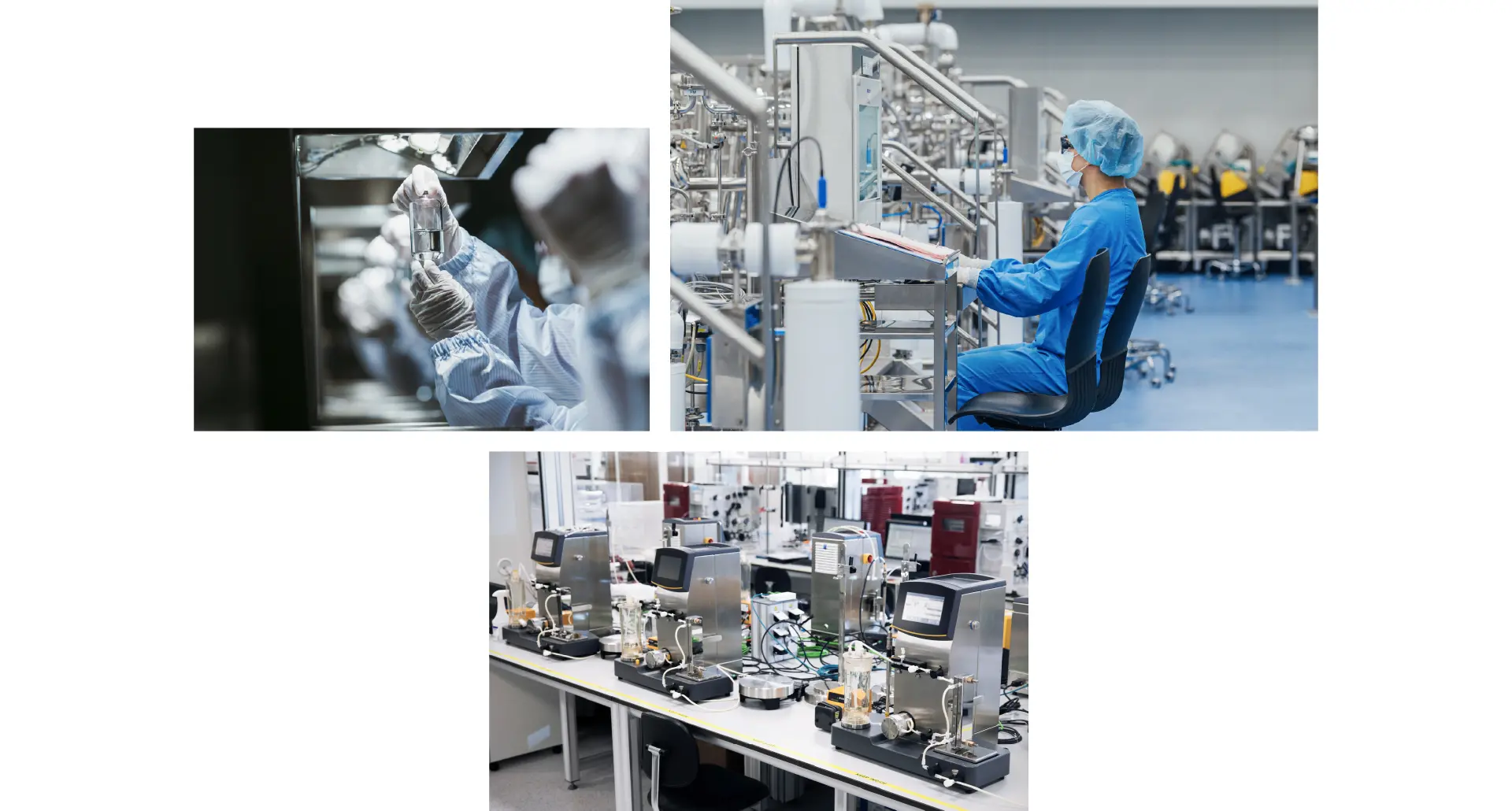
One of the most significant industry trends is the evolution of predictive scale-down models. While scale-down models have been used for many years, they are becoming increasingly representative of large-scale manufacturing conditions. Rather than simply reducing process volume, today's models are designed to capture factors such as mixing differences, gas transfer limitations, and carbon dioxide accumulation. This allows teams to better understand how a process may behave at manufacturing scale.
When small-scale models accurately reflect large-scale behavior, teams can identify potential risks earlier, improve process understanding, and reduce uncertainty during technology transfer. It also supports comparability studies and helps evaluate process performance before manufacturing-scale activities begin.
As manufacturing becomes increasingly data-driven, process development teams are playing a growing role in connecting development data with commercial manufacturing outcomes. Rather than reacting to issues after scale-up, the focus is increasingly shifting toward understanding process behavior earlier and applying those insights throughout development and manufacturing.
“Predictability requires strong data governance”
- David Kang, Compliance QA
Q. What role does data governance play in supporting manufacturing execution?
As manufacturing environments become increasingly digitalized, the way companies manage data is becoming just as important as the processes themselves. Rather than evaluating individual records in isolation, companies are placing greater emphasis on how data is generated, managed, and maintained throughout its lifecycle.
This shift is driving greater focus on data connectivity, traceability and governance frameworks that help support consistent, right-first-time execution across interconnected systems.
As digital transformation continues across the industry, quality teams are becoming increasingly involved earlier in system design and governance activities, helping establish sustainable controls that support consistent execution across operations.
“Strengthening the final check before patients”
- Mitsutaka Shirasaki, Principal Scientist, Visual Inspection & Packaging in DP manufacturing
Q. How are automation and digital technologies changing the final stage of manufacturing?
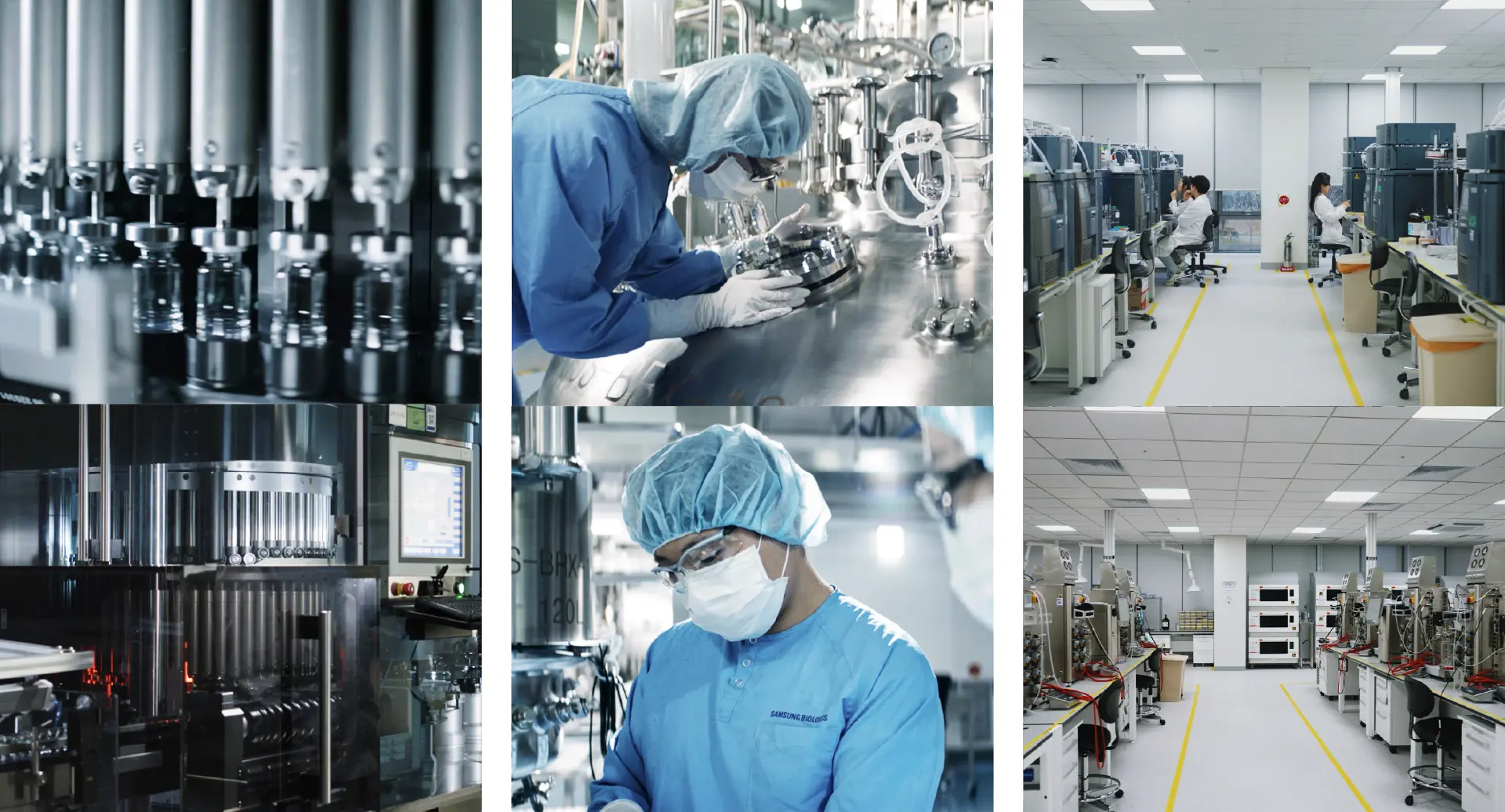
Visual inspection represents one of the final manufacturing activities before products reach patients. As production volumes increase and product portfolios become more diverse, manufacturers are exploring new ways to support consistency throughout inspection operations.
Automation and AI-enabled technologies are playing an increasingly important role. While AI does not replace human expertise, deep learning models can support image evaluation in a way that more closely resembles human judgment and help identify subtle defects that may be difficult to distinguish using conventional approaches alone.
At the same time, implementation requires careful validation and documentation. In highly regulated environments, introducing new technologies must be accompanied by a structured approach that aligns with regulatory expectations and established operational practices.
Alongside automation efforts, Samsung Biologics continues to apply comprehensive quality practices, including maintaining defect libraries and robust inspection approaches designed to support consistent quality assessment before products reach patients.
A shared goal across the manufacturing lifecycle
Although their areas of expertise differ, the three experts describe a common direction for achieving predictable manufacturing: applying deeper process understanding, structured governance, and digital technologies across the manufacturing lifecycle.
From development and technology transfer to data management and product release, each function contributes to how manufacturing operations are planned, executed, and continuously improved.
As biopharmaceutical manufacturing continues to evolve, these capabilities are expected to play an important role in supporting right-first-time execution and operational excellence across increasingly complex manufacturing environments.
As biopharmaceutical manufacturing evolves, manufacturers are placing greater emphasis on reducing variability and strengthening process understanding across the product lifecycle. From process development and technology transfer to quality oversight and product release, each stage presents opportunities to improve how manufacturing outcomes are anticipated, managed, and consistently executed.

To explore how these priorities are shaping the future of biomanufacturing, we turned to insights from three experts at Samsung Biologics - working across process development, quality, and drug product (DP) manufacturing - whose recent discussions on these topics offered valuable perspectives. While their roles differ, each contributes to a broader effort to support predictable manufacturing through deeper process understanding, regulatory alignment, and digital innovation.
“Predictability starts with process understanding”
- Kateryna Mykhailova, Process Development Upstream
Q. How can manufacturers strengthen process understanding before commercial manufacturing begins?
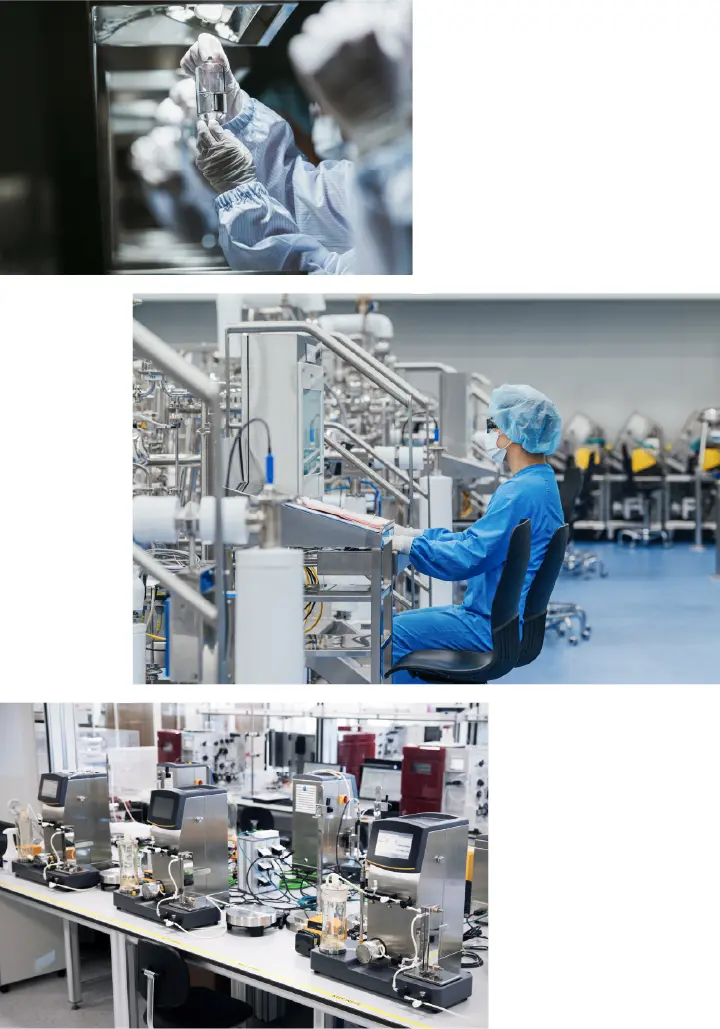
One of the most significant industry trends is the evolution of predictive scale-down models. While scale-down models have been used for many years, they are becoming increasingly representative of large-scale manufacturing conditions. Rather than simply reducing process volume, today's models are designed to capture factors such as mixing differences, gas transfer limitations, and carbon dioxide accumulation. This allows teams to better understand how a process may behave at manufacturing scale.
When small-scale models accurately reflect large-scale behavior, teams can identify potential risks earlier, improve process understanding, and reduce uncertainty during technology transfer. It also supports comparability studies and helps evaluate process performance before manufacturing-scale activities begin.
As manufacturing becomes increasingly data-driven, process development teams are playing a growing role in connecting development data with commercial manufacturing outcomes. Rather than reacting to issues after scale-up, the focus is increasingly shifting toward understanding process behavior earlier and applying those insights throughout development and manufacturing.
“Predictability requires strong data governance”
- David Kang, Compliance QA
Q. What role does data governance play in supporting manufacturing execution?
As manufacturing environments become increasingly digitalized, the way companies manage data is becoming just as important as the processes themselves. Rather than evaluating individual records in isolation, companies are placing greater emphasis on how data is generated, managed, and maintained throughout its lifecycle.
This shift is driving greater focus on data connectivity, traceability and governance frameworks that help support consistent, right-first-time execution across interconnected systems.
As digital transformation continues across the industry, quality teams are becoming increasingly involved earlier in system design and governance activities, helping establish sustainable controls that support consistent execution across operations.
“Strengthening the final check before patients”
- Mitsutaka Shirasaki, Principal Scientist, Visual Inspection & Packaging in DP manufacturing
Q. How are automation and digital technologies changing the final stage of manufacturing?
Visual inspection represents one of the final manufacturing activities before products reach patients. As production volumes increase and product portfolios become more diverse, manufacturers are exploring new ways to support consistency throughout inspection operations.
Automation and AI-enabled technologies are playing an increasingly important role. While AI does not replace human expertise, deep learning models can support image evaluation in a way that more closely resembles human judgment and help identify subtle defects that may be difficult to distinguish using conventional approaches alone.
At the same time, implementation requires careful validation and documentation. In highly regulated environments, introducing new technologies must be accompanied by a structured approach that aligns with regulatory expectations and established operational practices.
Alongside automation efforts, Samsung Biologics continues to apply comprehensive quality practices, including maintaining defect libraries and robust inspection approaches designed to support consistent quality assessment before products reach patients.
A shared goal across the manufacturing lifecycle
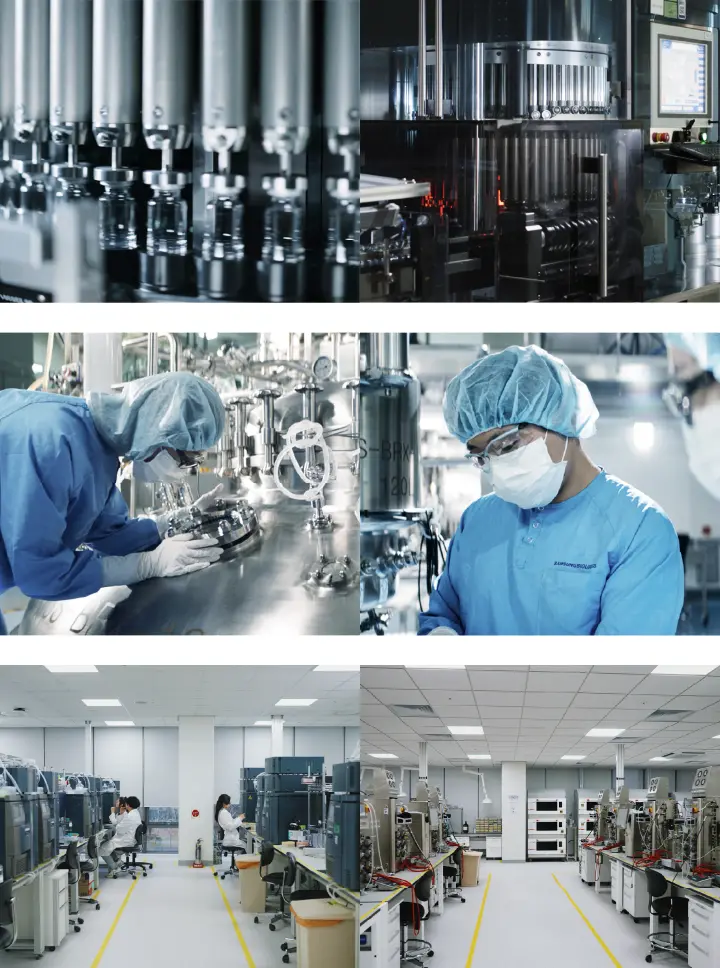
Although their areas of expertise differ, the three experts describe a common direction for achieving predictable manufacturing: applying deeper process understanding, structured governance, and digital technologies across the manufacturing lifecycle.
From development and technology transfer to data management and product release, each function contributes to how manufacturing operations are planned, executed, and continuously improved.
As biopharmaceutical manufacturing continues to evolve, these capabilities are expected to play an important role in supporting right-first-time execution and operational excellence across increasingly complex manufacturing environments.
Share article
Related Content