Engineering Agility: Downstream Processing & Scale-Up for mAbs, Bispecifics & Bioconjugates
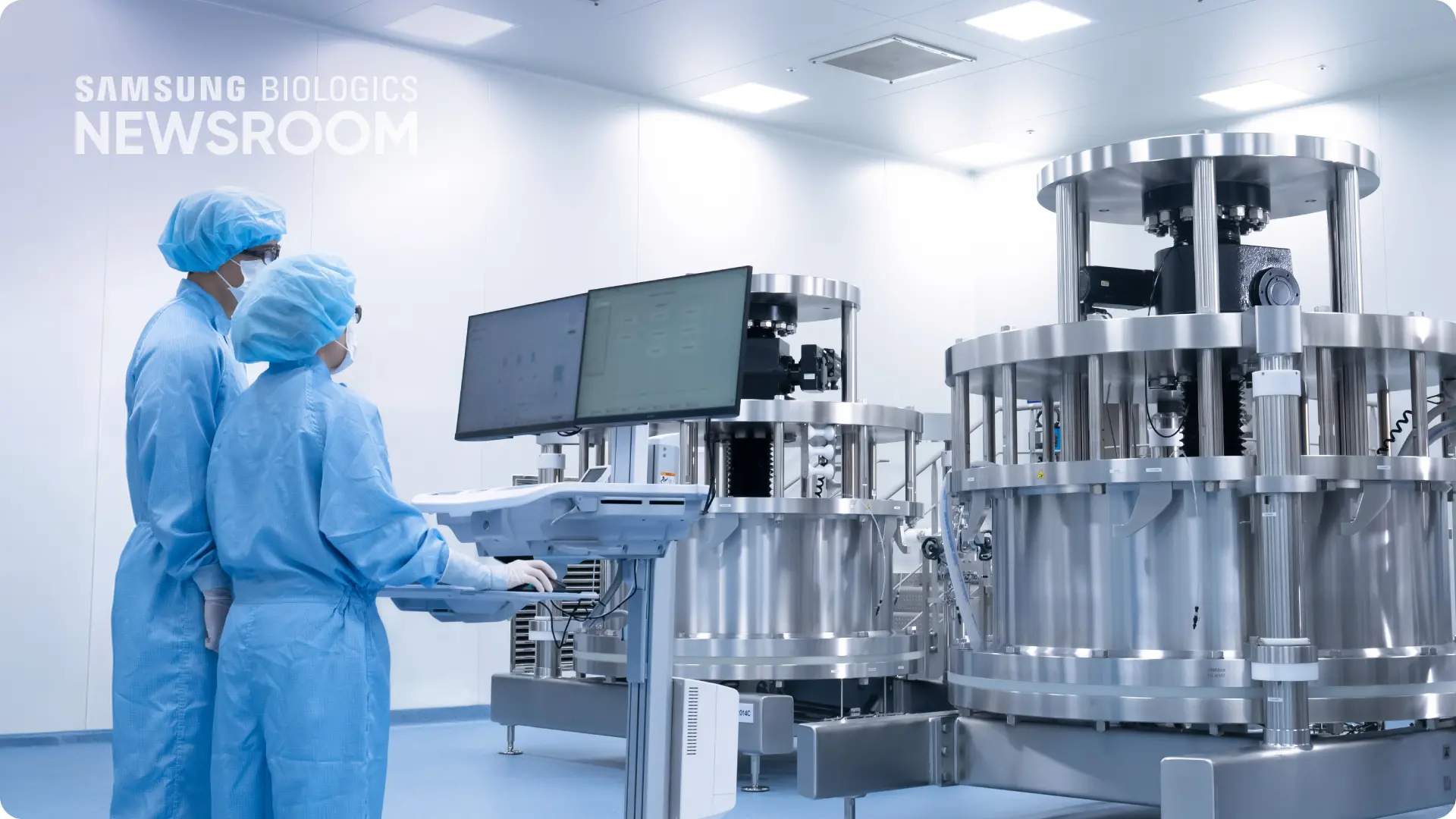
A biopharmaceutical progresses from the lab to the manufacturing floor through careful orchestration, where downstream processing culminates in the bulk drug substance, followed by drug product formulation and fill-finish. As the industry expands beyond conventional monoclonal antibodies into more complex modalities, agility in downstream design has become essential. This article explores how Samsung Biologics tailors its downstream operations — leveraging a proven platform-purification foundation, adaptable process engineering, and a flexible manufacturing footprint — to meet the needs of diverse biologic programs.
The essential steps of downstream processes
In biopharmaceutical manufacturing, upstream processes (seed-train expansion and bioreactor production that generate the clarified harvest) are essential, but downstream processing — purifying that harvest into bulk drug substance — is equally critical for final product quality. Every step in the downstream process matters:
- Protein A capture - using Protein A to capture the target protein at high concentration
- Low-pH viral inactivation - inactivating enveloped virus
- Intermediate polishing - removing residual impurities during intermediate purification
- Viral filtration - filtering the process stream to remove viral particles
- Ultrafiltration/diafiltration (UF/DF) - using UF/DF to concentrate the target protein and exchange the buffer to maintain stability
Throughout this intricate workflow, balancing purity and recovery is key to manufacturing efficiency.
Monoclonal antibodies vs. complex molecules: How downstream processes diverge
For monoclonal antibodies, platform purification follows a well-established approach. For many projects, purity and other quality parameters are set before technology transfer, so robust, consistent processes keep parameters within specification without recovery loss.
However, downstream processes can vary by target product, and as modality complexity rises, the need for more sophisticated process design increases. Advanced modalities, such as fusion proteins, bispecific antibodies, and bioconjugates, often challenge conventional downstream processes and require more intricate process designs. “Bispecific antibodies have more product-related impurities and greater heterogeneity, and we often have to dramatically adjust the column-loading conditions — such as pH or conductivity — to separate the desired protein with higher specificity,” says Jeongsoo Lee, Associate Director of Downstream Process MSAT. “For complex molecules, the product-pool hold stability tends to be relatively lower than that of well-established conventional monoclonal antibodies, which limits the hold time. Given the difficulty in maintaining stability, we need to move to the next step quickly – this agility keeps the product safe and the process on schedule.”
Breadth of experience ensures readiness for diverse modalities
Samsung Biologics has extensive experience with various modalities including bispecific antibodies, bioconjugates, and fusion proteins and a deep scale-up capability that enables the transition from lab to commercial scale without sacrificing the quality considerations built into its platforms.
“Lab-scale data do not always represent commercial-scale manufacturing outcomes. Take chromatography, for example: Lab-scale results may predict a certain yield from a specific process design, but manufacturing inevitably introduces losses. We continuously monitor the process and analyze the data to minimize loss and achieve the optimal level of recovery,” says Lee.
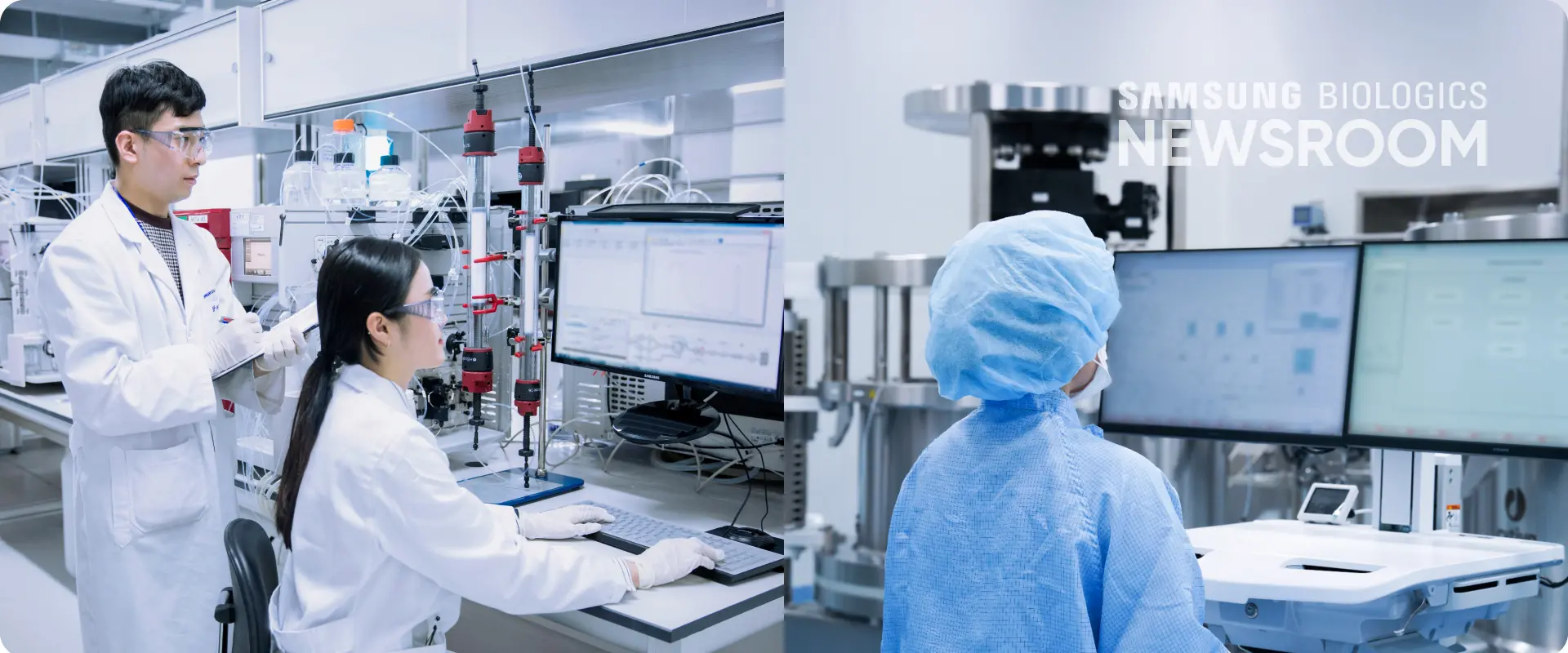
For one project, based on the company’s cumulative experience, the downstream team worked closely with the client, who approved a transition to fewer pool filters than initially requested. This change decreased potential losses without compromising product quality, ultimately delivering greater efficiency at a lower cost.
We have built on our expertise in lab-to-large-scale expansion to strengthen our downstream capabilities for new modalities. Fusion protein processes, for instance, require closer attention to variables such as pH and conductivity adjustments. Some bispecific antibodies require an extra step to combine the two upstream parental materials before purification begins. These process design variations highlight the importance of adaptive capabilities in downstream manufacturing.
Flexibility in downstream process design
Flexibility is central to process design for diverse modalities. At Samsung Biologics, that flexibility is only as powerful as the people behind it — our employees’ quality-first, client-centric mindset drives our facilities and frameworks. Guided by this mindset, we have embedded two types of flexibility into our operations:
- Physical flexibility stems from our facility layout, which is characterized by spatial arrangement that enables shared piping configurations between adjacent units when capacity is limited. Moveable and ample equipment space facilitates the introduction of new equipment, ensuring that processes adapt efficiently to project requirements.
- Operational flexibility is reinforced by ExellenS™, a unified manufacturing framework that not only reduces the time for internal technology transfer between plants but also ensures consistent quality.
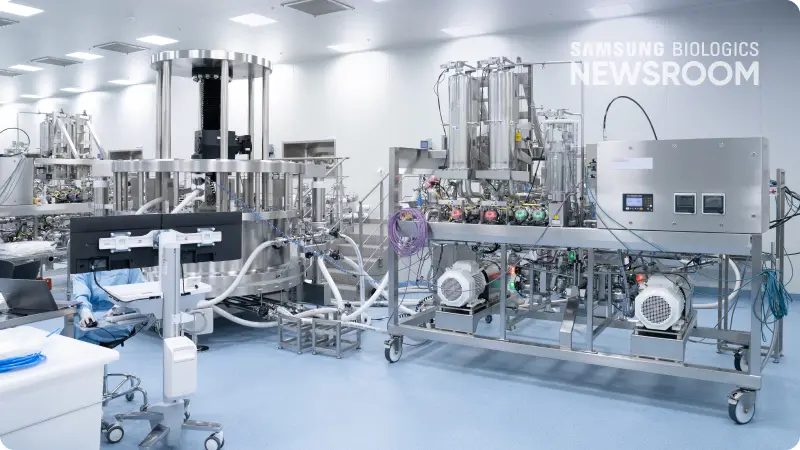
Samsung Biologics’ downstream expertise — built on proven platform purification, adaptable process engineering, and a flexible manufacturing footprint — ensures that every biologic is consistently captured, purified, concentrated, and formulated to the highest quality standards. By leveraging the ExellenS™ framework, moveable equipment, and a client-first, quality-driven culture, we can swiftly tailor downstream workflows to the specific challenges of monoclonal antibodies, bispecifics, fusion proteins, and other emerging modalities. This operational agility safeguards product integrity and shortens time-to-market, ultimately delivering advanced therapies to patients more efficiently.
A biopharmaceutical progresses from the lab to the manufacturing floor through careful orchestration, where downstream processing culminates in the bulk drug substance, followed by drug product formulation and fill-finish. As the industry expands beyond conventional monoclonal antibodies into more complex modalities, agility in downstream design has become essential. This article explores how Samsung Biologics tailors its downstream operations — leveraging a proven platform-purification foundation, adaptable process engineering, and a flexible manufacturing footprint — to meet the needs of diverse biologic programs.
The essential steps of downstream processes
In biopharmaceutical manufacturing, upstream processes (seed-train expansion and bioreactor production that generate the clarified harvest) are essential, but downstream processing — purifying that harvest into bulk drug substance — is equally critical for final product quality. Every step in the downstream process matters:
- Protein A capture - using Protein A to capture the target protein at high concentration
- Low-pH viral inactivation - inactivating enveloped virus
- Intermediate polishing - removing residual impurities during intermediate purification
- Viral filtration - filtering the process stream to remove viral particles
- Ultrafiltration/diafiltration (UF/DF) - using UF/DF to concentrate the target protein and exchange the buffer to maintain stability
Throughout this intricate workflow, balancing purity and recovery is key to manufacturing efficiency.
Monoclonal antibodies vs. complex molecules: How downstream processes diverge
For monoclonal antibodies, platform purification follows a well-established approach. For many projects, purity and other quality parameters are set before technology transfer, so robust, consistent processes keep parameters within specification without recovery loss.
However, downstream processes can vary by target product, and as modality complexity rises, the need for more sophisticated process design increases. Advanced modalities, such as fusion proteins, bispecific antibodies, and bioconjugates, often challenge conventional downstream processes and require more intricate process designs. “Bispecific antibodies have more product-related impurities and greater heterogeneity, and we often have to dramatically adjust the column-loading conditions — such as pH or conductivity — to separate the desired protein with higher specificity,” says Jeongsoo Lee, Associate Director of Downstream Process MSAT. “For complex molecules, the product-pool hold stability tends to be relatively lower than that of well-established conventional monoclonal antibodies, which limits the hold time. Given the difficulty in maintaining stability, we need to move to the next step quickly – this agility keeps the product safe and the process on schedule.”
Breadth of experience ensures readiness for diverse modalities
Samsung Biologics has extensive experience with various modalities including bispecific antibodies, bioconjugates, and fusion proteins and a deep scale-up capability that enables the transition from lab to commercial scale without sacrificing the quality considerations built into its platforms.
“Lab-scale data do not always represent commercial-scale manufacturing outcomes. Take chromatography, for example: Lab-scale results may predict a certain yield from a specific process design, but manufacturing inevitably introduces losses. We continuously monitor the process and analyze the data to minimize loss and achieve the optimal level of recovery,” says Lee.
For one project, based on the company’s cumulative experience, the downstream team worked closely with the client, who approved a transition to fewer pool filters than initially requested. This change decreased potential losses without compromising product quality, ultimately delivering greater efficiency at a lower cost.
We have built on our expertise in lab-to-large-scale expansion to strengthen our downstream capabilities for new modalities. Fusion protein processes, for instance, require closer attention to variables such as pH and conductivity adjustments. Some bispecific antibodies require an extra step to combine the two upstream parental materials before purification begins. These process design variations highlight the importance of adaptive capabilities in downstream manufacturing.
Flexibility in downstream process design
Flexibility is central to process design for diverse modalities. At Samsung Biologics, that flexibility is only as powerful as the people behind it — our employees’ quality-first, client-centric mindset drives our facilities and frameworks. Guided by this mindset, we have embedded two types of flexibility into our operations:
- Physical flexibility stems from our facility layout, which is characterized by spatial arrangement that enables shared piping configurations between adjacent units when capacity is limited. Moveable and ample equipment space facilitates the introduction of new equipment, ensuring that processes adapt efficiently to project requirements.
- Operational flexibility is reinforced by ExellenS™, a unified manufacturing framework that not only reduces the time for internal technology transfer between plants but also ensures consistent quality.
Samsung Biologics’ downstream expertise — built on proven platform purification, adaptable process engineering, and a flexible manufacturing footprint — ensures that every biologic is consistently captured, purified, concentrated, and formulated to the highest quality standards. By leveraging the ExellenS™ framework, moveable equipment, and a client-first, quality-driven culture, we can swiftly tailor downstream workflows to the specific challenges of monoclonal antibodies, bispecifics, fusion proteins, and other emerging modalities. This operational agility safeguards product integrity and shortens time-to-market, ultimately delivering advanced therapies to patients more efficiently.
Share article
Related Content