Driving multi-modal flexibility through robust upstream processes at Samsung Biologics
In biopharmaceutical manufacturing, the upstream process is a key engine that drives the production journey. Cell culture conditions critically impact product quality, and this influence becomes even more pronounced in emerging modalities, such as multispecific antibodies and fusion proteins. A meticulously designed upstream process is essential for ensuring the efficient production of target molecules.
Changhan Lee, Associate Director of Upstream Processing, explains how Samsung Biologics leverages advanced systems, cutting-edge technologies, and seasoned expertise to provide robust upstream operations.
Complexities of Scale-up
Commercial scale-up for biopharmaceuticals is not a linear process. “Vessel dimensions do not increase proportionally to bioreactor capacity, making it more challenging to achieve optimal mixing and maintain a homogeneous environment throughout the bioreactor,” Lee notes. “Even minor changes, such as alterations to the agitation system, can risk cell viability and homogeneity inside the vessel, illustrating the need for precise control over shear stress and mixing dynamics.”
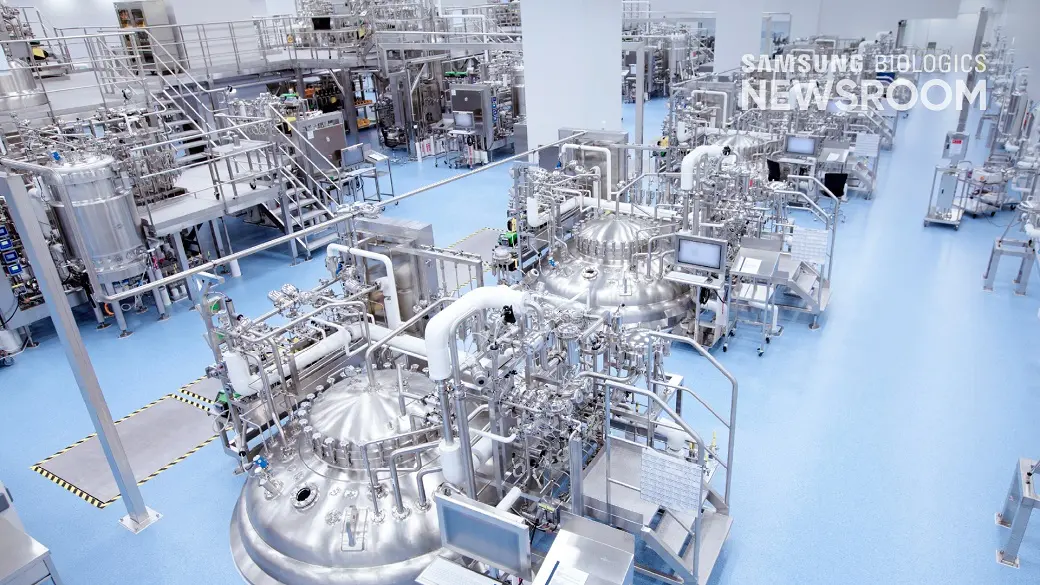
The emergence of next-generation biologics introduces additional layers of complexity. “One of the key challenges lies in maintaining molecule stability, as complex molecules typically exhibit lower tolerance for process parameters (pH, temperature, etc.) than do monoclonal antibodies, making early-stage cell line development more demanding. Since bispecific antibody therapeutics often achieve lower titers, Samsung Biologics imposes stricter process conditions to safeguard cell productivity.”
Scale and Multi-modal Capability as Strategic Assets
Samsung Biologics holds the largest manufacturing capacity among biopharma contract development and manufacturing organizations (CDMOs). The addition of the Rockville campus in the U.S. further solidifies our position as a leading CDMO, and translates into greater production flexibility and faster ramp-up of clinical and commercial supply for clients.
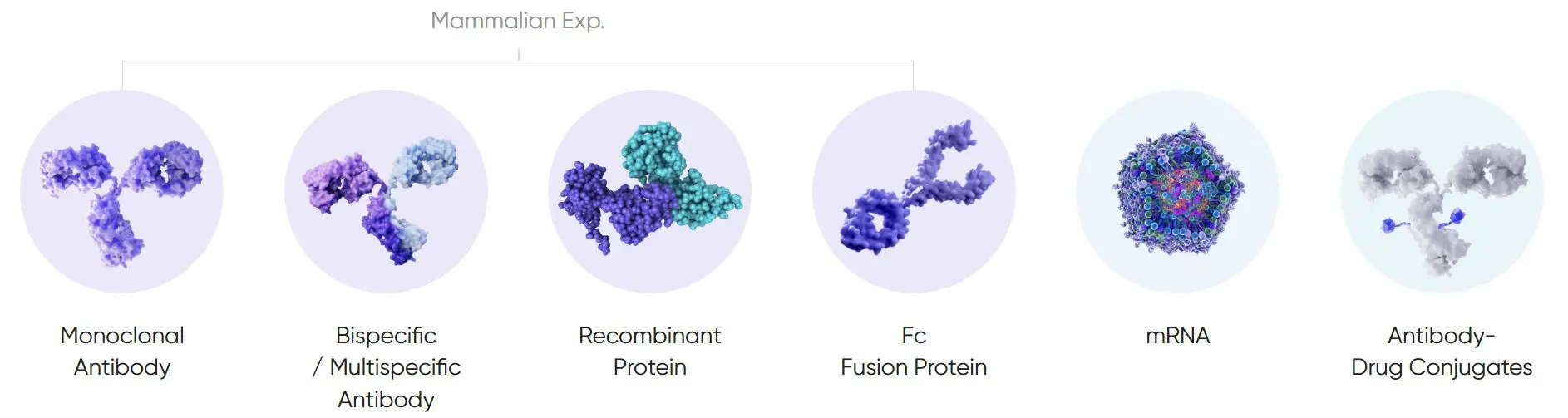
Going beyond scale, our facilities can accommodate a wide spectrum of biomedicines, including monoclonal and multispecific antibodies, antibody-drug conjugates (ADCs), and mRNAs. This modality-agnostic capability is reinforced by deep expertise across each technology, supporting a fully integrated approach to the development and manufacturing of complex, next-generation molecules within a single, integrated site.
Digital-first Process Optimization with CFD and Raman Spectroscopy
At Samsung Biologics, we use computational fluid dynamics (CFD) as part of our digital twin strategy to simulate upstream operations. One area where we use CFD is in identifying issues that affect mixing performance. In this situation, CFD helps us fine-tune shear stress on agitator blades before a physical trial and optimize mixing speed to achieve homogeneity inside the vessel.
CFD is also useful in cleaning operations. Large-scale stainless-steel bioreactors present cleaning challenges, demonstrating the importance of clean-in-place and steam-in-place validation to prevent cross-contamination. “CFD identifies regions that are not being cleaned effectively and guides adjustments to spray-ball design – including flow rates, position, and pump specifications – to ensure effective cleaning,” says Lee. Through digital twin-based troubleshooting of cleaning operations prior to at-scale manufacturing, CFD helps mitigate cross-contamination risk.

Samsung Biologics incorporates other technologies into its upstream manufacturing processes. Process Analytical Technology (PAT) continuously collects real-time data, enabling detailed analysis and early detection of deviations before manual sampling. As part of PAT implementation, our upstream process experts employ a Raman probe to monitor metabolite status in bioreactors on a continuous basis. Data is transmitted in real time to our clients, who can track the process whenever needed. Comparing historical and real-time Raman probe data enables early troubleshooting, reducing the risk of batch failures.
Flexibility Fueled by Standardization
A unified framework provides a standardized foundation for upstream processes, automation recipes, validation protocols, batch records, and related documentation across all plants. However, the system must remain flexible to accommodate the unique requirements of all modalities. At Samsung Biologics, our standardization and documentation systems not only streamline internal communication but also translate risk-assessment data into objective metrics, facilitating transparent dialogue with regulators and clients during inspections.
Dedicated Project Management Team
Project management is also a key part of what we do. For example, one of the bispecific antibody manufacturing projects requires two distinct monoclonal antibodies to be produced separately at the same site and then combined during downstream processing. Because each component has its own production timeline, careful coordination is essential. Our experienced project management team oversees this dual‑production schedule, fine‑tuning parallel processes to minimize timing differences. We synchronize the scheduling of our large‑scale bioreactor operations to reduce production gaps and deliver seamless, cadence‑driven manufacturing services.
Samsung Biologics’ approach to biopharmaceutical manufacturing leverages advanced technologies and a standardized operational framework. We prioritize seamless scale-up from initial development to full-scale manufacturing to deliver high-quality drug products across a wide range of modalities. Our digitalization strategy mitigates risks associated with manufacturing scale-up, while a commitment to standardization and effective project management pave the way for addressing client needs. In the evolving landscape of complex biopharmaceuticals, we continue to set the benchmark for excellence, innovation, and partnership in the life sciences.
In biopharmaceutical manufacturing, the upstream process is a key engine that drives the production journey. Cell culture conditions critically impact product quality, and this influence becomes even more pronounced in emerging modalities, such as multispecific antibodies and fusion proteins. A meticulously designed upstream process is essential for ensuring the efficient production of target molecules.
Changhan Lee, Associate Director of Upstream Processing, explains how Samsung Biologics leverages advanced systems, cutting-edge technologies, and seasoned expertise to provide robust upstream operations.
Complexities of Scale-up
Commercial scale-up for biopharmaceuticals is not a linear process. “Vessel dimensions do not increase proportionally to bioreactor capacity, making it more challenging to achieve optimal mixing and maintain a homogeneous environment throughout the bioreactor,” Lee notes. “Even minor changes, such as alterations to the agitation system, can risk cell viability and homogeneity inside the vessel, illustrating the need for precise control over shear stress and mixing dynamics.”
The emergence of next-generation biologics introduces additional layers of complexity. “One of the key challenges lies in maintaining molecule stability, as complex molecules typically exhibit lower tolerance for process parameters (pH, temperature, etc.) than do monoclonal antibodies, making early-stage cell line development more demanding. Since bispecific antibody therapeutics often achieve lower titers, Samsung Biologics imposes stricter process conditions to safeguard cell productivity.”
Scale and Multi-modal Capability as Strategic Assets
Samsung Biologics holds the largest manufacturing capacity among biopharma contract development and manufacturing organizations (CDMOs). The addition of the Rockville campus in the U.S. further solidifies our position as a leading CDMO, and translates into greater production flexibility and faster ramp-up of clinical and commercial supply for clients.
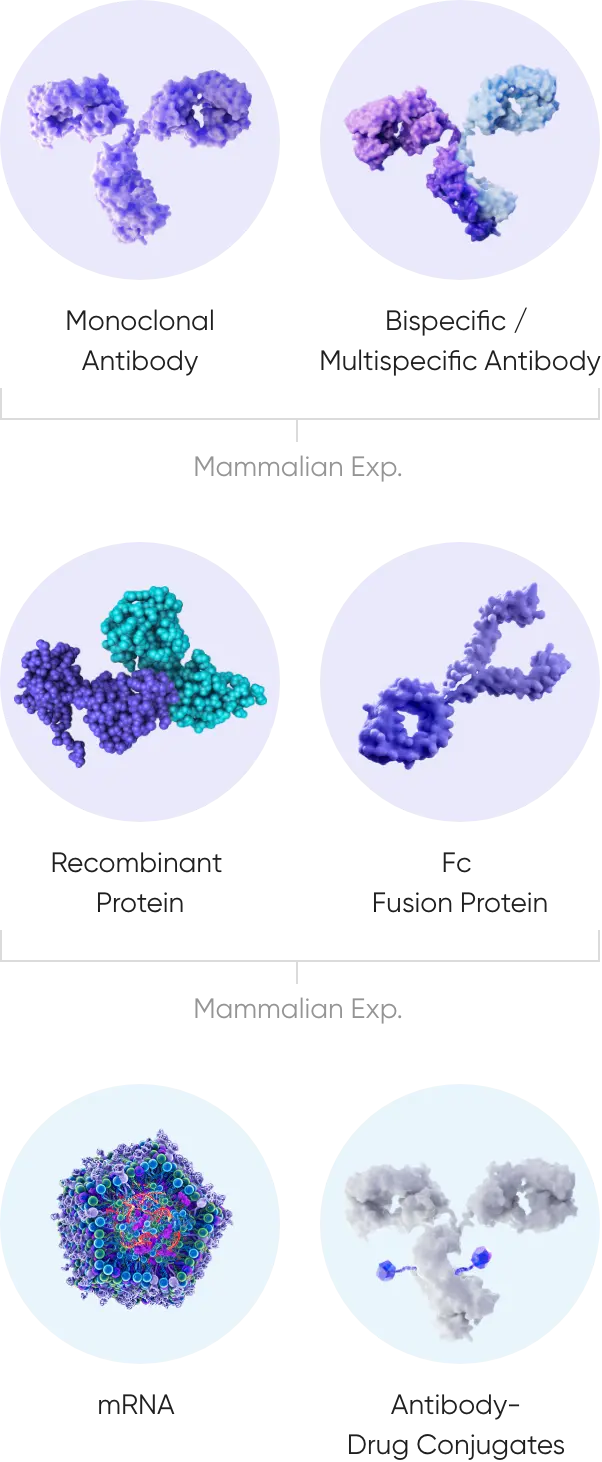
Going beyond scale, our facilities can accommodate a wide spectrum of biomedicines, including monoclonal and multispecific antibodies, antibody-drug conjugates (ADCs), and mRNAs. This modality-agnostic capability is reinforced by deep expertise across each technology, supporting a fully integrated approach to the development and manufacturing of complex, next-generation molecules within a single, integrated site.
Digital-first Process Optimization with CFD and Raman Spectroscopy
At Samsung Biologics, we use computational fluid dynamics (CFD) as part of our digital twin strategy to simulate upstream operations. One area where we use CFD is in identifying issues that affect mixing performance. In this situation, CFD helps us fine-tune shear stress on agitator blades before a physical trial and optimize mixing speed to achieve homogeneity inside the vessel.
CFD is also useful in cleaning operations. Large-scale stainless-steel bioreactors present cleaning challenges, demonstrating the importance of clean-in-place and steam-in-place validation to prevent cross-contamination. “CFD identifies regions that are not being cleaned effectively and guides adjustments to spray-ball design – including flow rates, position, and pump specifications – to ensure effective cleaning,” says Lee. Through digital twin-based troubleshooting of cleaning operations prior to at-scale manufacturing, CFD helps mitigate cross-contamination risk.
Samsung Biologics incorporates other technologies into its upstream manufacturing processes. Process Analytical Technology (PAT) continuously collects real-time data, enabling detailed analysis and early detection of deviations before manual sampling. As part of PAT implementation, our upstream process experts employ a Raman probe to monitor metabolite status in bioreactors on a continuous basis. Data is transmitted in real time to our clients, who can track the process whenever needed. Comparing historical and real-time Raman probe data enables early troubleshooting, reducing the risk of batch failures.
Flexibility Fueled by Standardization
A unified framework provides a standardized foundation for upstream processes, automation recipes, validation protocols, batch records, and related documentation across all plants. However, the system must remain flexible to accommodate the unique requirements of all modalities. At Samsung Biologics, our standardization and documentation systems not only streamline internal communication but also translate risk-assessment data into objective metrics, facilitating transparent dialogue with regulators and clients during inspections.
Dedicated Project Management Team
Project management is also a key part of what we do. For example, one of the bispecific antibody manufacturing projects requires two distinct monoclonal antibodies to be produced separately at the same site and then combined during downstream processing. Because each component has its own production timeline, careful coordination is essential. Our experienced project management team oversees this dual‑production schedule, fine‑tuning parallel processes to minimize timing differences. We synchronize the scheduling of our large‑scale bioreactor operations to reduce production gaps and deliver seamless, cadence‑driven manufacturing services.
Samsung Biologics’ approach to biopharmaceutical manufacturing leverages advanced technologies and a standardized operational framework. We prioritize seamless scale-up from initial development to full-scale manufacturing to deliver high-quality drug products across a wide range of modalities. Our digitalization strategy mitigates risks associated with manufacturing scale-up, while a commitment to standardization and effective project management pave the way for addressing client needs. In the evolving landscape of complex biopharmaceuticals, we continue to set the benchmark for excellence, innovation, and partnership in the life sciences.
Share article
Related Content